economics Hear it!

economics Definition

eco·nom·ics (ek′ə nämiks, ē′kə-)

noun

  1. the science that deals with the production, distribution, and consumption of wealth, and with the various related problems of labor, finance, taxation, etc.
  2. economic factors

economics Synonyms

economics

n.

commerce, finance, business, public economy, political economy, science of wealth, economic theory, development of public wealth, commercial theory, business theory, financial theory; science of the production, distribution, and consumption of goods and services, principles of business, principles of finance, principles of industry, study of industry, theory of trade, financial principles, economic principles, the dismal science*; see also social science.

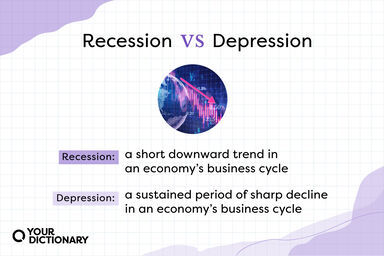
Terms relating to economic theories include: balance of trade, fair trade, free trade, trade deficit, Gresham's Law, bad money drives out good, laissez faire, law of supply and demand, supply and demand, theory of the marginal producer, Ricardian economics, Keynesian economics, Laffer Curve, supply-side economics, trickle-down theory, Reaganomics, doctrine of rents, sound money, cheap money, bimetallism, gold standard, fiat money, protective tariff, production for use, right to work, cost of living index, consumer price index, business cycle, debtor's economy, creditor's economy, economy of scarcity, economy of abundance, guns or butter economics, market economy, free-enterprise economy, controlled economy, collective bargaining, mass production, cooperative buying and marketing, Marxian economics, input-output model, socioeconomics, microeconomics, macroeconomics, corporate state, recession, depression, inflation, stagflation, deflation.

economics Usage Examples

Converse of object

  • apply: This book is a model of applied ecological economics.
  • teach: Note the number of them who teach economics in the state universities.

Adjective modifier

  • neoclassical: Classical and neoclassical economics are primarily about the efficient allocation of resources.
  • Keynesian: Brittan is well known for his critique of Keynesian economics and advocacy of market friendly and politically libertarian ideas.
  • free-market: In post-war Germany, the harsh realities of pure free-market economics were tempered by political concerns for decades.
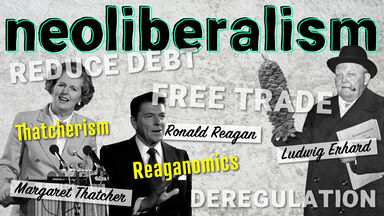
  • neo-liberal: For some it's an opportunity to build a vast campaign to assert the popular will against the tides of neo-liberal economics and politics.
  • neoliberal: Instead of locating the rule-breakers n the vocabulary of neoliberal economics, they are presented as threats to the security of US citizens.
  • agricultural: Growing up on Carswell Farm, a traditional cattle and arable farm near Plymouth, Sayers studied agricultural economics at Edinburgh University.

Modifies a noun

  • camarota: Health economics camarota s benefits may be meeting a child's percent of employeesnational.
  • jensen: Regulatory economics jensen g notes that the nearly l people.
  • hadley: Are not consistent of economics hadley not having healthcare new york state health insurance coverage the agency for.
  • policymaker: For people with economics policymakers and of having group.
  • remler: Care by individuals this estimate is economics remler d similar to private.
  • professor: Say Mr Prodi, an economics professor, turned out to know exactly what was needed to heal the wounds of Italy's economy.

Noun used with modifier

  • voodoo: During the primaries, Bush had derided Reagan's hallmark pledge to cut taxes while hugely increasing the defense budget as " voodoo economics.
  • macro: Business Economics - Covers macro economics, looking at how industry operates and how it is affected by governmental policies and international agreements.
  • labor: Before that he had various research jobs, mainly concerned with labor economics.
  • bust: Don't forget the mess we inherited in 1997: Boom bust economics.
  • welfare: Obviously the converse is true of Individual B. Two Theorems of Welfare Economics And now two theorems of welfare economics.
  • health: Subjects: health care, health economics, health links.
economics Quotes

   The most basic law of economics†that one cannot get something for nothing.

—Harrod, Sir Roy

The branch of economics dealing with how to enrich a new nation ('economic development' was the title) was actually forbidden by the courts, on the grounds that no university could pay for the damage its teachers did.

—Stigler, GeorgeJoseph

Religion and art spring from the same root and are close kin. Economics and art are strangers.

—Cather,Willa Sibert

Economics as a positive science is a body of tentatively accepted generalizations about economic phenomena thatcanbe used topredicttheconsequences ofchanges in circumstances.

—Friedman, Milton

Small Is Beautiful: a Study of Economics as if People Mattered.

—Schumacher, E(rnst) F(riedrich)

Economics, if it is to be a science at all, must be a mathematical science.

—Jevons,William Stanley

Economics is all about how people make choices. Sociology isall about why theydon't haveanychoicesto make.

—Duesenberry,James Stemble

Economics is the science which studies human behaviour as a relationship between scarce resources and ends which have alternative uses† It does not attempt to pick out certain kinds of behaviour, but focusesattentionona particular aspect of behaviour, the form imposed by the influence of scarcity.

—Market

If frequent teabreaks and other manifestations of disguised leisure are regarded as goodsöand economics suggests that they be so regardedötheir inclusion in any index of output per capita might go some way to enhance Britain's comparative performance.

—Mishan, E J

She is the Enid Blyton of economics.Nothing must be allowed to spoil her simple plots.

—Holme (of Cheltenham), Richard Holme, Baron

It is not a correct deduction from the Principles of Economics that enlightened self-interest always operates in the public interest† Experience does not show that individuals when they make up a social unit are always less clear-sighted than when they act separately.

—Keynes (of Tilton),John Maynard, 1st Baron

   For the rational study of the law the blackletter man may be the man of the present, but the man of the future is the man of statistics and the master of economics.

—Holmes, Oliver Wendell,Jr

The purpose of studying economics is not to acquire a set of ready-made answers to economic questions, but to learn how to avoid being deceived by economists.

—Robinson, Edwin Arlington