computer Hear it!

computer Definition

com·puter (kəm pyo̵̅o̅tər)

noun

  1. a person who computes
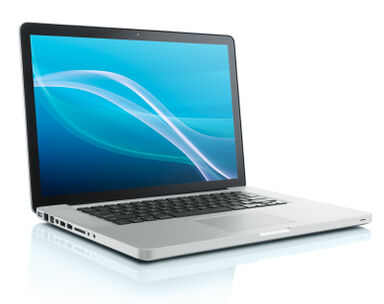
  2. a device used for computing; specif., an electronic machine which, by means of stored instructions and information, performs rapid, often complex calculations or compiles, correlates, and selects data; now, esp., digital computer

computer Synonyms

computer

n.

personal computer, PC, microcomputer, minicomputer, mainframe, laptop computer, home computer, workstation, supercomputer, electronic brain, thinking machine, data processor, word processor, calculator, processor, supermini, superminicomputer, supermicro, master control, number cruncher*, machine*, cybernetic organism, digital computer*, analog computer*, network*, neural net, neural network. *

Various trademarked brands of computers include: IBM, Apple, Macintosh, Mac, Compaq, Cray, Hewlett-Packard, Toshiba, Digital, NEC, Sun, Amiga.

Computer Hacker Definition
A programmable machine that responds to specified instructions and can execute a list of instructions known as a program. Today’s computers are electronic and ­digital—with wires, transistors, and circuits comprising the hardware and instructions and data comprising the software. Computers generally have these hardware components: (1) memory, allowing a computer to store data and programs, at least temporarily; (2) mass storage devices, allowing a computer to store and retain large amounts of data on the disk drives and tape drives; (3) input devices such as keyboards and a mouse, which act as conduits through which data are entered into a computer; (4) output devices, such as display screens and printers, that let users see what the computer has performed; and (5) a CPU or central processing unit, the primary component that executes the commands or instructions.

On a humorous note, in a New Scientist article, futurologist Ray Kurzwell said that although a $1,000 personal computer in 2005 has about the computing power equivalent to that of an insect brain, if development advances continue at the same rate into the future, within 15 years a $1,000 personal computer should have the computing power equivalent to that of a human brain.

On a global note, a controversial “computer-political” case arose on March 8, 2005, when Japan’s anti-monopoly agency demanded that Intel Corporation stop business practices that the agency alleged were giving the world’s dominant CPU chip maker an unfair advantage in the PC marketplace. Japan’s Fair Trade Commission (FTC) maintained that it would put forth a motion to enforce harsh actions if Intel failed to respond within 10 days to the allegations.

In particular, the FTC claimed that Intel was in breach of Japan’s antitrust laws as early as 2002 when the company gave discounts and marketing payments to PC manufacturers in exchange for exclusivity or near-exclusivity. The FTC claimed that Intel was engaging in actions to keep the CPUs made by competing companies from being used—thus resulting in the limited marketing success of Japan’s own CPU chip manufacturers. Intel’s marketshare of the CPU market in Japan rose to 90% in 2004 from 78% in 2002. The FTC alleged that Intel had offered special incentives to Hitachi Ltd., Sony Corporation, Fujitsu Ltd., Toshiba Corporation, and NEC Corporation to use the Intel chip and the branding of “Intel Inside” or “Centrino” (Intel’s wireless networking chipset). Intel defended its business practices as being not only fair but also lawful.

See Also: Network; Wireless.

Associated Press. Microchips: Japanese Watchdog says Intel Practices Illegal. The Globe and Mail, March 9, 2005, p. B12; Kesterton, M. Upgrade Your System? The Globe and Mail, May 6, 2005.
computer Telecom Definition
A machine that computes. Specifically, a modern computer is a digital electronic system that performs complex calculations or compiles, correlates, or otherwise processes data based on instructions in the form of stored programs and input data.A device that can receive, store, retrieve, process, and output data.
computer Usage Examples

Converse of object

  • connect: A network that connects computer together within a small area, usually a single office.
  • aid: The increased power and rapid development of software tools for computer aided design and manufacturing management have strengthened this need.
  • restart: On completion, you will be asked to remove the floppy disk and press any key to restart the computer.
  • assist: Tutorials plus computer assisted learning ( CAL ) hours TBA.

Adjective modifier

  • laptop: Contact us - We have a range of safes for the security of your laptop computers.
  • desktop: In a lab or classroom, why should a desktop computer strap you to the desk?
  • portable: What you can do Portable computers don't have to be painful.
  • personal: Users can download music conveniently using an online music store from their personal computer or directly via air.

Modifies a noun

  • science: He received a PhD degree in computer science in 1990 at the University of Leiden, in the Netherlands.
  • simulation: Computer simulations which have been prepared by the architects show how stunning the building will look with its new roof of green Cumberland slate.
  • screen: Part Three looks at display type - both on the printed page and the computer screen.
  • game: Twenty years ago there were no mobile phones, no DVDs, no computer games to speak of.
  • program: The artifact does not have to be a computer program: a design document might be the appropriate output from a design study.
  • virus: Causes of virus infection Much as HIV is spread by unsafe practices, so are computer viruses.

Noun used with modifier

  • notebook: Either way, there's an ergonomic price to pay with notebook computers.
  • handheld: The PDA is a small, portable handheld computer that typically comes equipped with diary and personal organizer tools.
  • laptop: The site alleges the young man from Barnet, north London, sold a broken laptop computer on eBay.
  • mainframe: A number of programmers working on big mainframe computers developed different computer games during the following years.
  • desktop: Fixed assets used by the charity should be briefly described, eg desktop computer, or make of motor vehicle.
  • on-board: The analog rev counter is complemented by a large, multi-functional digital display complete with on-board computer for all essential information.
computer Quotes

Cyberspace. A consensual hallucination experienced daily by billions of legitimate operators, in every nation, by children being taught mathematical concepts† A graphical representation of data abstracted from the banks of every computer in the human system. Unthinkable complexity.Lines of light ranged inthenon- space of the mind, clusters and constellations of data. Like city lights, receding.

—Gibson,William Ford

The Buddha, the Godhead, resides quite as comfortably inthe circuits of a digital computeror thegears of a cycle transmission ashe does at thetop of a mountainor in the petals of a flower.

—Pirsig, Robert M(aynard)

The computer is a fast idiot, it has no imagination; it cannot originate action. It is, and will remain, only a tool to man.

—American LibraryAssociation

The life-efficiency and adaptability of the computer must be questioned. Its judicious use depends upon the availability of its human employers quite literally to keep their own heads, not merely to scrutinize the programming but to reserve for themselves the right of ultimate decision. No automatic system can be intelligently run byautomatonsöor by people who dare not assert human intuition, human autonomy, human purpose.

—Mumford, Lewis

For reasons of high aesthetic principle, I do not write on a computer.

—O'Rourke, P(atrick) J(ake)

Man is still the most extraordinary computer of all.

—Kennedy,John F(itzgerald)

We've tended to forget that no computer will ever ask a new question.

—Hopper, Grace Murray